
DIY Natural Dye Projects: Using Botanicals for Arts & Crafts


Natural dyeing is a rewarding, eco-friendly craft that turns ordinary fabrics and yarns into unique, colorful pieces using plants from your apothecary. Butterfly Pea flower creates magical blues and purples, Calendula gives sunny yellows and oranges, and many other dried herbs and botanicals deliver beautiful results.
In this hands-on DIY guide, you’ll discover why natural dyes are wonderful, the best botanicals to use, essential techniques, and fun projects you can try at home.
Why Choose Natural Dyes?
Sustainable and Non-Toxic — Safe for the planet and gentle on skin.
Unique, Living Colors — Soft, vintage-style hues that shift beautifully with light and time.
Creative & Therapeutic — The process feels meditative and connects you with nature.
Versatile — Works on cotton, linen, silk, wool, and even paper or eggs.
Zero Waste — Many botanicals do double duty as teas or culinary herbs.

Top Botanicals for Natural Dyeing
These loose dried herbs and flowers release color easily when simmered:
Butterfly Pea Flowers — Striking blues that magically shift to purple/pink with lemon (pH sensitive).
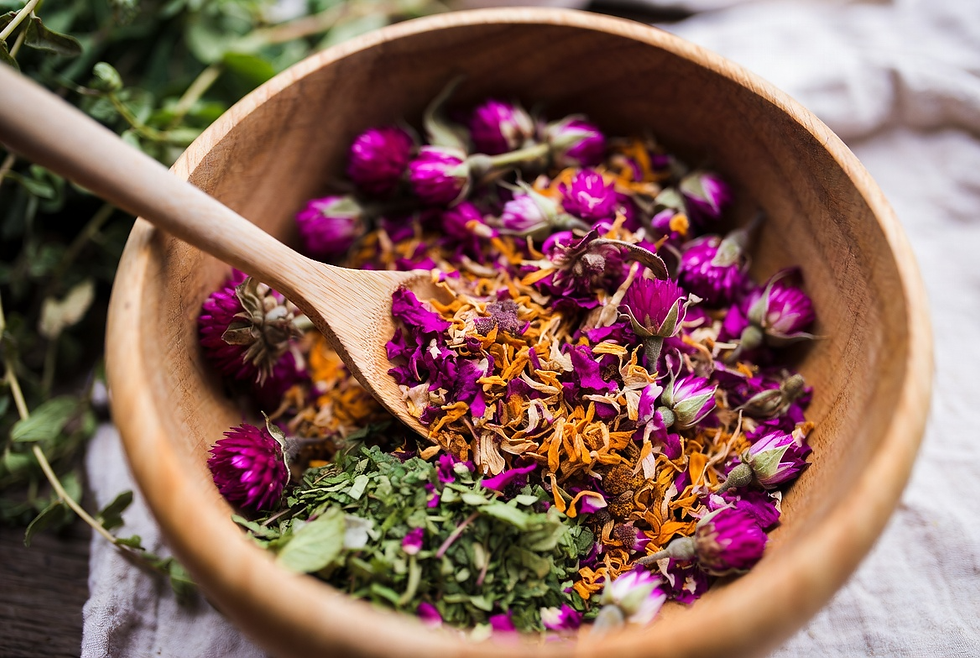
Calendula Flowers — Cheerful yellows to golden oranges.
Safflower Petals — Bright yellows or soft pinks/corals depending on pH.
Turmeric Root — Vibrant golden yellows (very strong and easy to use).
Hibiscus Flowers — Deep pinks to reddish-purples.
Rose Buds & Petals — Soft pinks and mauves.
Globe Amaranth Flowers — Rich purplish-red and magenta tones.
Cinnamon Bark — Warm tans, browns, and soft golds.
Dragon’s Blood Resin — Deep, dramatic reds (use sparingly as it’s potent).
Mandarin Orange Peel — Fresh oranges and yellows.
Mulberries — Beautiful purples and blues.
Perilla Leaf — Soft greens to purplish tones.
Lavender — Soft grays, lavenders, and muted purples (especially on wool).
Lemon Balm — Fresh yellow-greens and soft chartreuse tones.
Mint Leaf — Bright greens and yellow-greens.
Materials You’ll Need
Loose dried botanicals from your collection
Natural fiber fabric/yarn (cotton, linen, silk, wool)
Stainless steel pot
Mordant (alum is beginner-friendly)
pH modifiers (lemon juice, vinegar, baking soda)
Gloves, strainer, and wooden spoon
Basic Natural Dyeing Process
1. Scour & Mordant
Wash fabric, then simmer in an alum solution (1–2 tbsp per gallon) for 45–60 minutes for better colorfastness.
2. Prepare the Dye Bath
Use 1–2 cups dried botanicals per pound of fabric. Simmer gently 30–60 minutes, then steep.
3. Dye the Fabric
Strain, add damp fabric, and simmer 30–60 minutes (or soak overnight for deeper color).
4. Rinse & Cure
Rinse until water runs clear and hang to dry out of direct sun.

Fun DIY Natural Dye Projects
Project 1: Butterfly Pea Color-Changing Scarf
Dye silk or cotton with Butterfly Pea. Spritz lemon juice on sections for dramatic blue-to-purple shifts.
Project 2: Calendula & Turmeric Sun-Dyed Tote Bag
Combine Calendula and Turmeric in a jar with a damp tote. Leave in a sunny window for 3–5 days for golden yellow tones.
Project 3: Safflower & Hibiscus Tie-Dye Bandana
Create yellows with Safflower and pinks with Hibiscus. Tie and dip sections for a cheerful rainbow effect.
Project 4: Dragon’s Blood & Cinnamon Wool Yarn
Dye wool skeins with Dragon’s Blood for rich reds and Cinnamon Bark for warm browns — perfect for knitting.
Project 5: Mandarin Orange & Mulberry Egg Dyeing
Simmer eggs in baths of Mandarin Peel (orange) and Mulberries (purple) for beautiful spring or Easter eggs.
Project 6: Perilla Leaf & Rose Botanical Bundle Dye
Roll fabric with Perilla leaves and Rose petals, tie tightly, and simmer for organic leaf prints and soft pinks.

Advanced Tips
pH Play — Lemon juice brightens Butterfly Pea and Safflower; baking soda can shift colors greener.
Iron Mordant — Deepens or “saddens” colors for earthy tones
Solar Dyeing — Great for delicate flowers like Calendula, Lemon Balm, and Mint.
Overdyeing — Layer colors (e.g., Turmeric yellow base + Butterfly Pea blue = greens).
Safety Tips & Best Practices
Wear gloves — some dyes (especially Safflower, Dragon’s Blood and Turmeric) stain strongly.
Use dedicated pots for dyeing.
Test small swatches first.
Compost leftover plant material.
Natural dyes are generally safe, but do a patch test for wearable items.
Ready to Start Dyeing?
Natural dyeing with Butterfly Pea, Calendula, Safflower, Turmeric, Dragon’s Blood, and other botanicals is an accessible, joyful craft. Start small with a tea towel or scarf and watch your creativity bloom. Shop high-quality bulk dried herbs at Trifecta Botanicals to fuel your next project.
What’s your favorite botanical for dyeing? Share your creations in the comments!


Comments